University, Academy, School Logo Design: Building Trust Through Visual Identity
When you think about the institutions that shaped your life, certain images likely come to mind before any words do. A shield, an open book, a graduation cap, or perhaps a stylized torch representing knowledge. These are not just decorative elements; they are the visual shorthand for credibility, tradition, and academic excellence. For anyone involved in creating or rebranding an educational entity, understanding the nuances of University, Academy, School Logo Design is crucial. It is less about making something look "smart" and more about communicating stability and aspiration.
In today’s digital-first world, the stakes for educational branding have never been higher. Whether you are launching an online tutoring platform, a niche coding academy, or a traditional private school, your logo serves as the first handshake with potential students and parents. It needs to work as well on a mobile app icon as it does on a embroidered blazer. This balance between modern functionality and academic heritage is where great design happens.
Why Symbolism Matters in Educational Branding
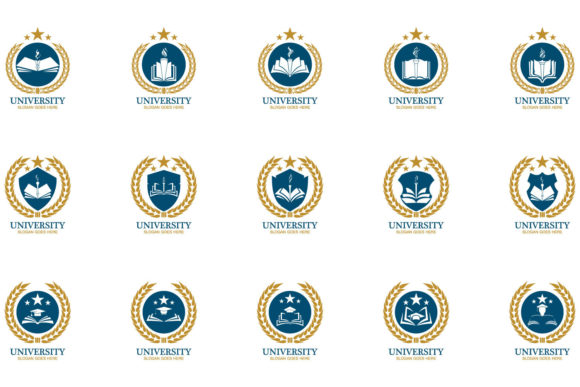
The core of effective education branding lies in symbolism. Unlike a tech startup that might prioritize abstract shapes to suggest innovation, educational institutions rely on established semiotics. A book suggests literature and learning. A shield implies protection, history, and prestige. A stamp or badge style conveys official certification. When you browse through vector templates or hire a designer, you are essentially choosing which values you want to highlight.
Consider the difference between a vintage style emblem and a sleek, abstract icon. A vintage design, often featuring serif fonts and intricate illustration details, works beautifully for institutions that want to emphasize long-standing tradition and rigorous study. On the other hand, a modern, minimalist graphic might better suit a coding bootcamp or a creative arts college where agility and contemporary skills are the selling points. The right concept aligns the visual style with the institution's actual mission.
Real-World Applications Beyond the Classroom
While the primary use case is obvious—identifying a school—the applications of a strong educational logo extend far beyond the front gate. Here is how different stakeholders utilize these designs in practical scenarios:
- Digital Presence and Web Design: In an era where most course research happens online, your logo must be scalable. A complex insignia might look majestic on a banner but become a blurry mess as a favicon. Modern web standards require logos that remain legible at small sizes, ensuring your brand is recognizable in browser tabs and social media profiles.
- Merchandise and Community Building: Students and alumni wear their affiliation with pride. A well-designed emblem translates effectively onto hoodies, tote bags, and water bottles. This turns students into brand ambassadors. If the design feels cheap or cluttered, people are less likely to wear it outside of class, missing a valuable marketing opportunity.
- Certification and Credibility: For online course creators and independent tutors, a professional badge or seal adds perceived value to certificates of completion. It transforms a simple PDF into a credential that looks official and worth sharing on LinkedIn.
- Grant Proposals and Partnerships: When approaching donors or corporate partners, a polished visual identity signals professionalism. It suggests that the institution is organized, serious, and here to stay. A hastily made logo can inadvertently signal instability.
Navigating the Design Process: What to Consider
If you are looking to commission or select a template for your institution, several factors should guide your decision. First, consider your audience. Are you targeting young children, whose parents value safety and fun? Or are you targeting graduate-level professionals who value prestige and networking? A playful, colorful icon might work for a preschool but would undermine the authority of a law academy.
Second, think about versatility. Your logo will appear on various backgrounds. An isolated version of your logo (one without a background box) is essential for flexible placement. Ensure you have versions that work on dark backgrounds, such as graduation gowns or night-mode apps, as well as light backgrounds like letterheads and websites.
Third, avoid clichés unless you can twist them creatively. The graduation cap and open book are ubiquitous in this industry. While they are instantly recognizable, they can also make your brand blend into the crowd. Consider how you can integrate these elements uniquely. Perhaps the book forms the shape of a bird, symbolizing freedom through learning, or the shield incorporates a local landmark to ground the institution in its community.
The Shift Toward Modern Minimalism
There is a noticeable trend in contemporary University, Academy, School Logo Design toward simplification. Many historic universities are flattening their detailed crests into cleaner, two-dimensional graphics. This shift is driven by the need for digital clarity. A vector file allows for infinite scalability without loss of quality, which is vital for everything from large campus banners to tiny smartwatch screens.
However, "modern" does not mean sterile. The best modern educational logos retain a sense of warmth and humanity. They use color psychology effectively—blue for trust and intelligence, green for growth, or orange for creativity and energy. The goal is to create a sign that feels approachable yet authoritative. It should invite the student in while reassuring the parent that their investment is safe.
Choosing Between Custom Design and Templates
Budget constraints often force educators and entrepreneurs to choose between hiring a professional designer and using a pre-made template. Both have their place. A custom design offers uniqueness and tailored strategic thinking, ensuring no other school shares your exact visual language. It is an investment in long-term brand equity.
Conversely, high-quality templates can be a lifeline for startups, homeschool co-ops, or small tutoring businesses. The key is customization. Never use a template as-is. Change the colors, adjust the typography, and modify the shape to ensure it doesn’t look generic. Even with a template, you can achieve a professional look if you pay attention to alignment, spacing, and font pairing. The aim is to create a cohesive identity that supports your educational goals, regardless of the origin of the graphic assets.
Ultimately, whether you are designing for a massive university or a local music school, the logo is more than just art. It is a promise. It promises quality, community, and transformation. By carefully selecting the right symbols, balancing tradition with modern usability, and considering the diverse ways your audience will interact with your brand, you create a visual foundation that supports learning and growth for years to come.